Nuts, Seeds and Grains: Protein Density and Quality
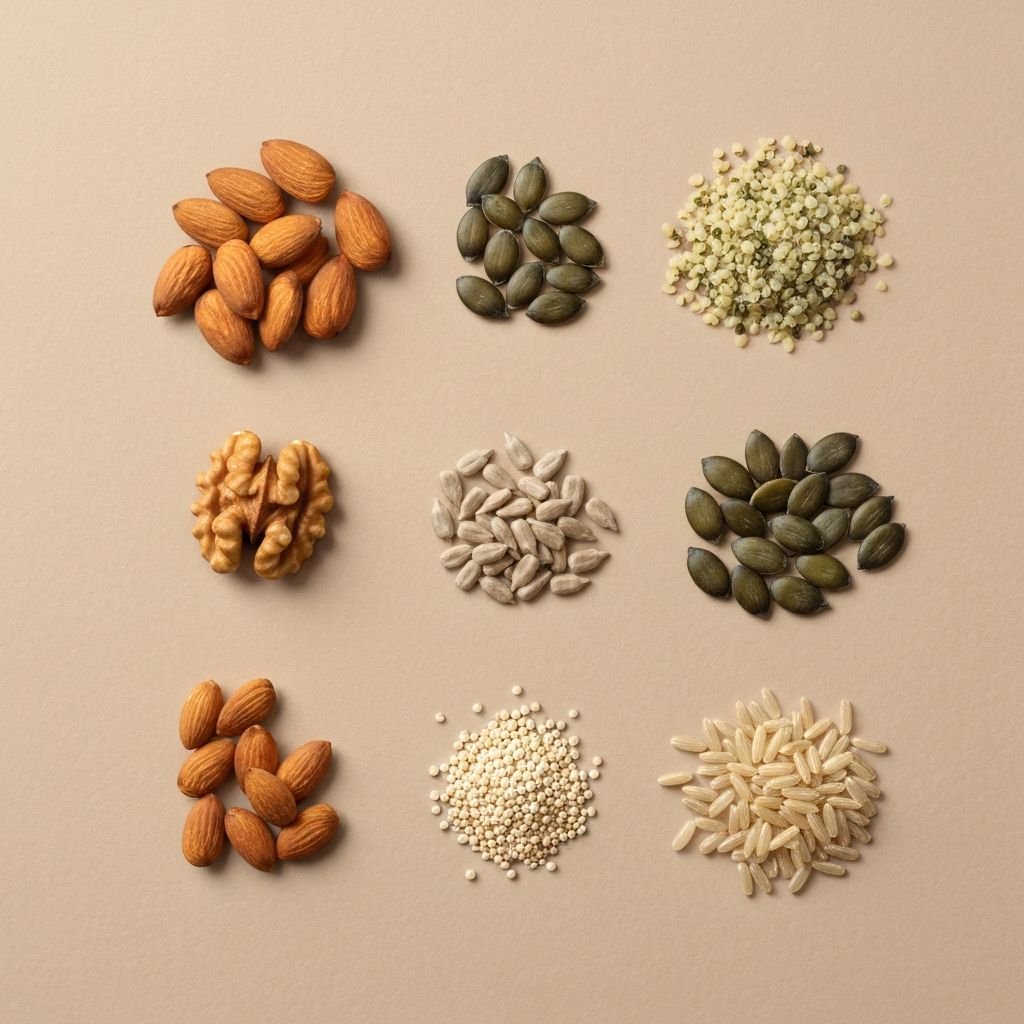
Nuts, seeds, and grains represent concentrated plant-based protein sources with distinctive amino acid profiles and nutrient density. These foods combine protein with lipids (in nuts and seeds) or complex carbohydrates (in grains), creating multifaceted nutritional profiles distinct from legumes and animal sources.
Nut and Seed Protein Density
Nuts and seeds concentrate protein relative to their water content, delivering 10-25 grams of protein per 100 grams raw weight. Almonds provide 21 grams per 100 grams, peanuts 26 grams, and hemp seeds 10 grams. This concentration reflects the biological function of these foods—nutrient-dense packages supporting plant embryo development. However, nuts and seeds simultaneously contain elevated lipid content, ranging from 50-70% of total calories in most varieties. This lipid concentration substantially influences digestibility, as fat can inhibit protein digestion through delayed gastric emptying.
| Nut/Seed Type | Protein (g/100g) | Fat (g/100g) | Amino Acid Strength |
|---|---|---|---|
| Almonds | 21 | 50 | Low in lysine |
| Peanuts | 26 | 49 | Low in lysine |
| Hemp Seeds | 10 | 49 | Complete profile |
| Pumpkin Seeds | 9 | 46 | Low in lysine |
| Sunflower Seeds | 8 | 51 | Low in lysine |
Grain Protein Characteristics
Grains provide protein within complex carbohydrate matrices, delivering 8-15 grams of protein per 100 grams depending on grain type and refinement level. Quinoa represents a pseudocereal with 4 grams protein per 100 grams cooked and 8 grams raw, demonstrating complete amino acid profile—a distinctive characteristic among plant-based grains. Most conventional grains (wheat, rice, oats, corn) provide 7-15 grams protein per 100 grams with amino acid profiles elevated in methionine relative to legumes but limited in lysine content. The carbohydrate predominance in grains (60-75% by weight) defines their primary metabolic role, with protein contributing secondary functionality.
| Grain Type | Protein (g/100g dry) | Complete Amino Profile | Amino Acid Limitation |
|---|---|---|---|
| Quinoa (uncooked) | 14 | Yes | None |
| Wheat (whole grain) | 13 | No | Low lysine |
| Brown Rice | 8 | No | Low lysine |
| Oats | 11 | No | Low lysine |
| Corn | 9 | No | Low tryptophan, lysine |
Amino Acid Profiles and Complementarity
Nuts and seeds demonstrate protein profiles with elevated methionine and relatively limited lysine. Grains similarly emphasize methionine while limiting lysine. These similar amino acid limitations create a distinctive pattern: nuts, seeds, and grains require combination with legumes (elevated lysine, limited methionine) to achieve complete amino acid coverage. Traditional food pairings reflect this complementarity—hummus (chickpeas and tahini/sesame seeds), bean burritos (beans and grain tortillas), or lentil rice dishes. However, varied consumption of different plant protein sources throughout daily intake provides complete amino acid intake independent of requiring specific meal combinations.
Bioavailability and Processing Effects
Nuts and seeds contain phytic acid and tannins that can chelate minerals and reduce protein digestibility. Soaking, sprouting, and roasting processes enhance nutrient bioavailability through enzyme activation and antinutrient degradation. Grain processing through fermentation (as in sourdough bread production) similarly improves mineral absorption and protein digestibility. DIAAS scores for nuts, seeds, and grains range from 0.4 to 0.8, lower than animal sources and even some legumes, reflecting continued antinutrient effects and lower digestibility. Ground or processed forms (nut butters, ground grains) may enhance accessibility but do not substantially alter digestibility compared to whole forms.
Micronutrient Contributions
Beyond protein contribution, nuts and seeds provide vitamin E, selenium, zinc, and magnesium alongside their lipid content. Grains concentrate B vitamins (particularly in whole grain forms) and provide manganese and copper. These micronutrient contributions distinguish nuts, seeds, and grains from isolated protein sources, reflecting their role as nutrient-dense foods providing multifaceted nutritional support.
Educational Context
This article presents nutritional data for informational purposes. Individual protein requirements and dietary suitability for nuts, seeds, and grains vary based on age, activity level, and personal preference. Dietary decisions reflect individual circumstances and cultural context.