Protein in Poultry and Meat: Data Overview
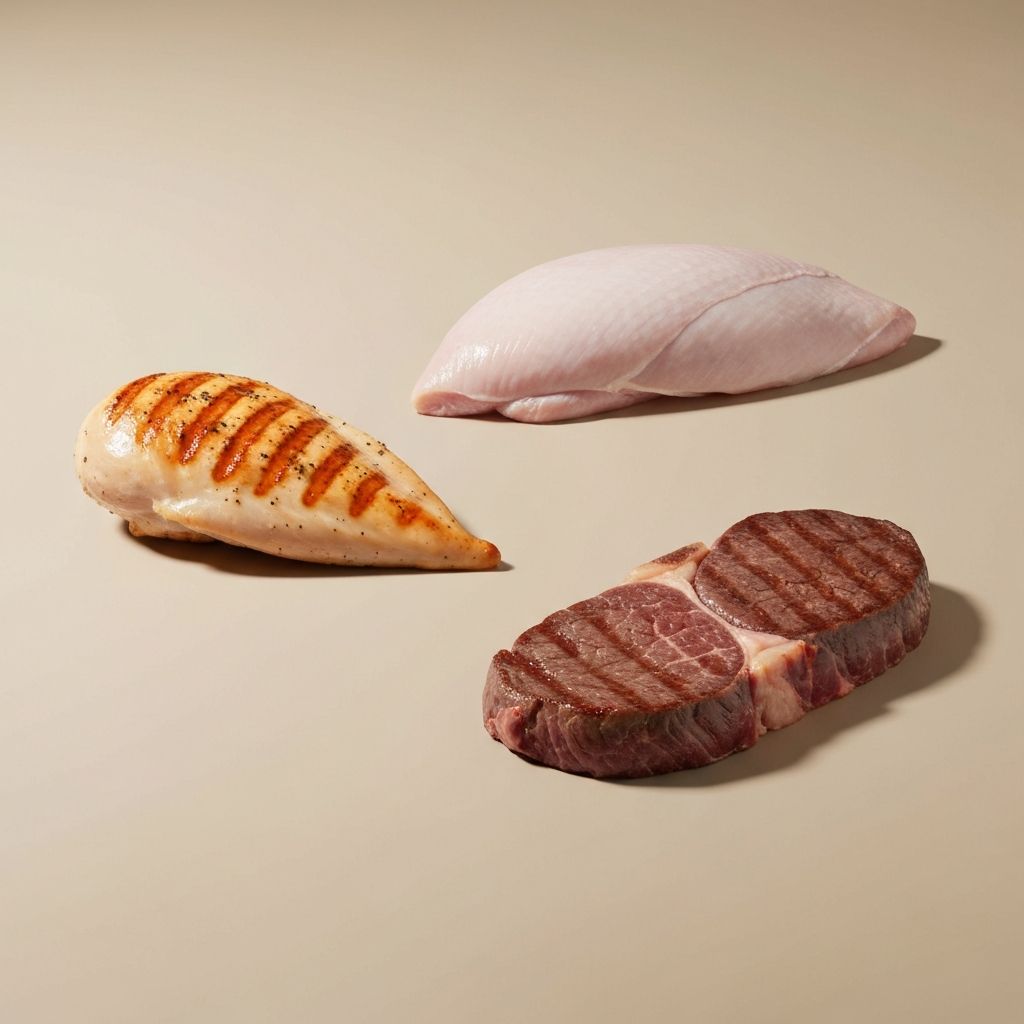
Poultry and meat represent concentrated animal protein sources with complete amino acid profiles. Comparative analysis across different categories reveals variation in protein density and micronutrient composition based on cut, preparation method, and animal type.
Poultry Protein Composition
Chicken and turkey provide accessible protein-dense foods across economically diverse populations globally. Breast meat demonstrates elevated protein concentration compared to thighs and drumsticks due to muscle fiber composition and myoglobin content. Chicken breast (skinless, cooked) contains approximately 31 grams of protein per 100 grams with minimal fat. Turkey breast presents similar protein density at 29 grams per 100 grams with comparable micronutrient profiles.
| Poultry Cut | Protein (g/100g) | Fat (g/100g) | DIAAS Score |
|---|---|---|---|
| Chicken Breast, skinless | 31 | 3.6 | 1.0 |
| Chicken Thigh, skinless | 26 | 9 | 1.0 |
| Turkey Breast | 29 | 1.3 | 1.0 |
| Duck Breast | 23 | 11 | 0.95 |
Red Meat Protein Characteristics
Beef and other red meats provide complete protein with distinctive amino acid ratios and iron bioavailability. Lean beef cuts contain approximately 26 grams of protein per 100 grams, comparable to poultry despite higher fat concentration in some cuts. Red meat demonstrates elevated heme iron content compared to poultry, improving iron absorption efficiency through distinct absorption mechanisms independent of non-heme iron transport.
| Red Meat Cut | Protein (g/100g) | Iron (mg/100g) | DIAAS Score |
|---|---|---|---|
| Beef Sirloin, lean | 26 | 2.6 | 1.0 |
| Beef Tenderloin | 27 | 2.3 | 1.0 |
| Pork Tenderloin | 27 | 1.3 | 0.99 |
| Lamb Leg | 25 | 1.8 | 1.0 |
Amino Acid Profiles and DIAAS Assessment
Poultry and red meat demonstrate complete amino acid profiles with DIAAS scores approaching or attaining 1.0, indicating complete protein quality. These foods contain all nine essential amino acids in proportions exceeding human requirements. Particularly notable concentrations include methionine, lysine, and the branched-chain amino acids (leucine, isoleucine, valine) that support muscle tissue protein synthesis.
Processing Effects on Protein Quality
Cooking meat through various methods (grilling, baking, boiling) does not substantially diminish protein quality. Heat denatures native protein structures, facilitating enzyme access during digestion and potentially improving digestibility. Extended cooking at high temperatures can generate advanced glycation end products and oxidized cholesterol compounds, though protein content and digestibility remain largely preserved.
Micronutrient Context
Beyond protein contribution, poultry and meat provide bioavailable micronutrients. Heme iron in red meat demonstrates superior absorption compared to plant-based non-heme iron. B vitamins (B12, B6, niacin) concentrate prominently in meat proteins. Zinc bioavailability in meat exceeds plant sources, supporting immune function and enzymatic processes. Selenium content in meat supports antioxidant protection through glutathione peroxidase synthesis.
Educational Context
This article presents nutritional data for informational purposes. Individual protein requirements vary based on age, sex, activity level, and health status. Dietary decisions should reflect personal preference, cultural context, and individual nutritional circumstances.